A Mute Toddler Screamed “Mommy” at a Waitress in a Glittering Restaurant — Then a Dead Man’s Video Revealed Five More Children Just Like Him
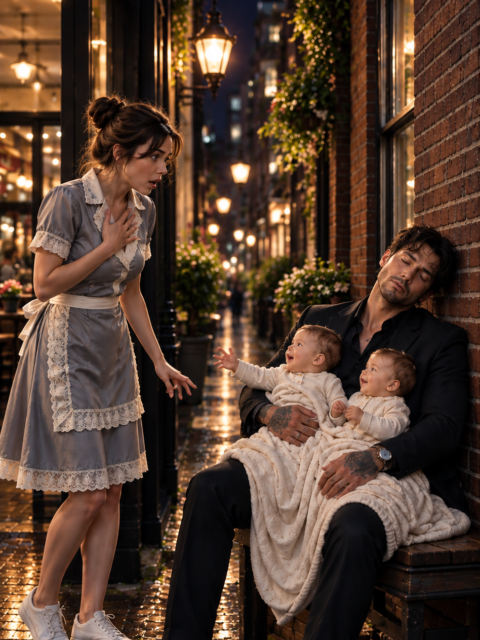
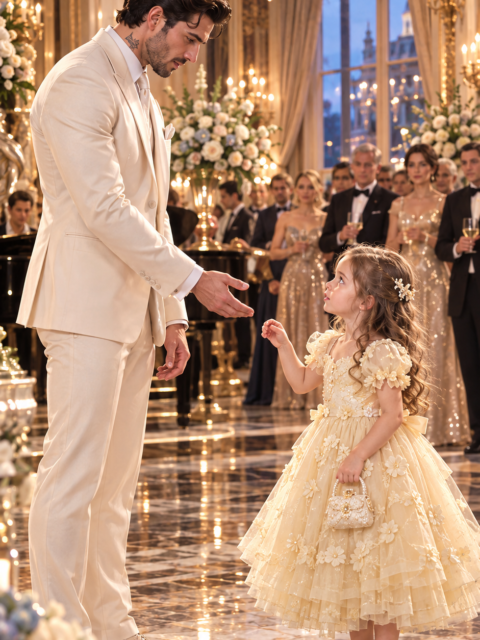
Samuel Hale had never spoken a single word until he broke free of his father’s table, ran across the restaurant floor, and threw himself into a waitress’s arms screaming for a mother she’d been told had died two years earlier. What Victor Hale uncovered that night went considerably further than one impossible reunion — his late father had secretly built embryos from his deceased wife’s genome and implanted them in unknowing surrogates across the country, and Samuel wasn’t the only child who survived. Read every chapter to find out what Project Eos actually was, and what happened to the other five.
Mommy
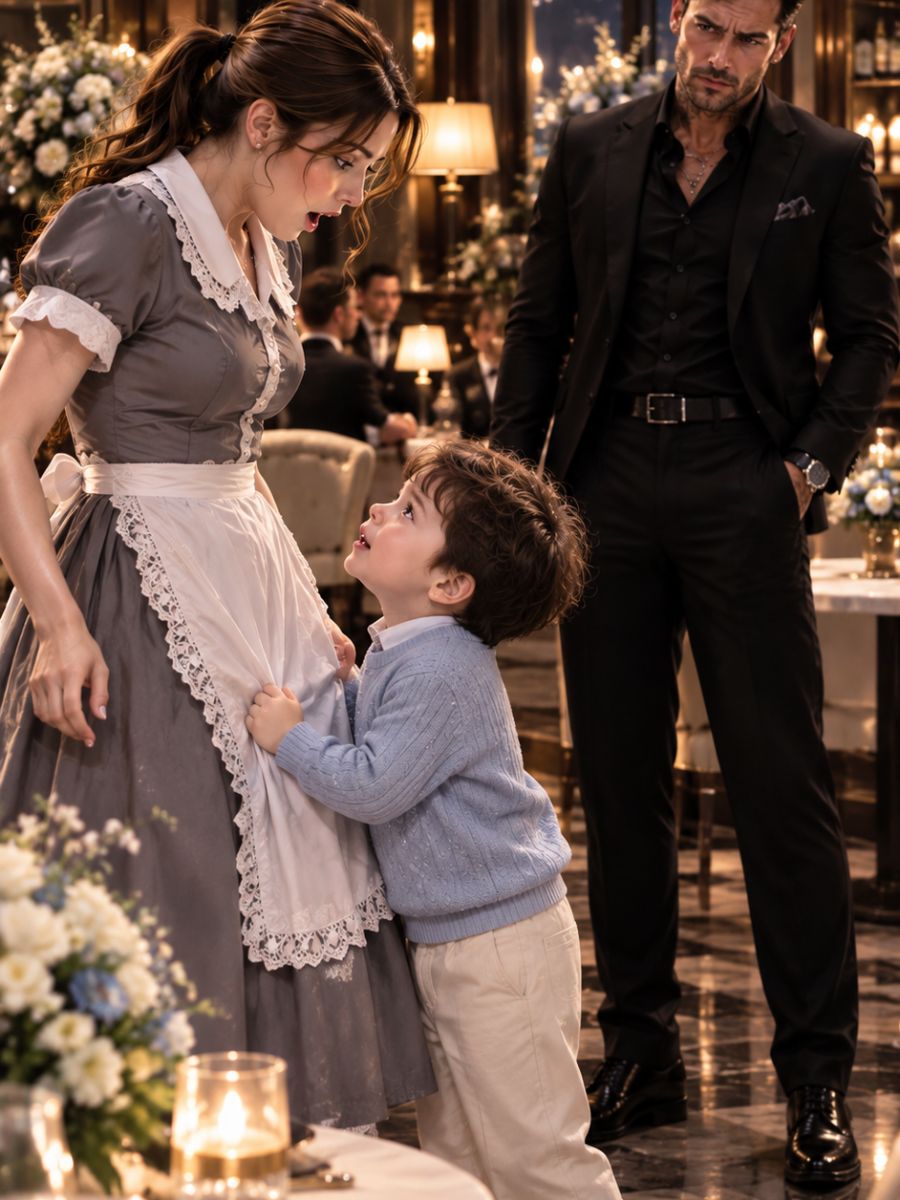
“Mommy!” The single word ripped through the glittering restaurant, and every conversation died. Evelyn Ward’s crystal pitcher slipped from her fingers and struck the table with a crack.
Across the marble floor stood two-year-old Samuel Hale, trembling beside his chair. Golden curls clung to his tear-streaked cheeks. His stuffed rabbit lay forgotten at his feet.
Then the little boy who had never spoken took one shaky step forward. And ran straight to Evelyn. “Mommy!” Tiny fists seized the waitress’s apron. Evelyn went deathly pale. “No, sweetheart. I’m not…” “Mommy!” Something inside Evelyn shattered.
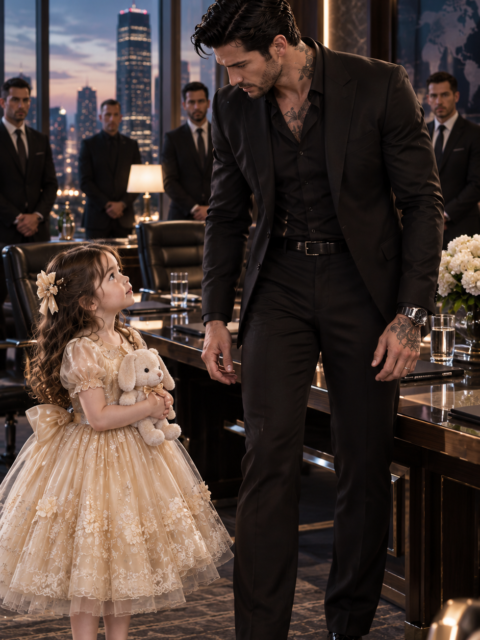
Billionaire Victor Hale shot to his feet. He had silenced entire boardrooms with a glance, but now he could only stare at his son. At his mouth. The faint crease between his brows. The way he tilted his head when he was frightened. Every detail seemed to echo the woman holding him.
Victor’s voice turned dangerously quiet. “Did you ever have a child?” Evelyn froze. “Yes.” “When?” “Two years ago.” Victor’s expression changed. “They told me he died,” Evelyn whispered. “Where?” “A clinic in Bern.” Victor stopped breathing.
Samuel began sobbing. Evelyn dropped to her knees, and the little boy collapsed against her chest as if he had finally found somewhere he remembered.
“Who was your doctor?” Victor asked. “Dr. Keller.” Victor’s eyes hardened. The same doctor had signed Samuel’s birth documents. “Close the doors.”
Forty minutes later, Evelyn sat inside Victor’s penthouse office with Samuel asleep in her arms while lawyers and medical specialists crowded around them. Files appeared across a wall-sized screen. Victor’s attorney, Marcus Vale, spoke carefully.
“Your records say the surrogate voluntarily surrendered the child forty-eight hours before delivery.” “I signed nothing.” Another document appeared. “Ms. Ward’s medical record says fetal death occurred at 3:12 a.m.” Victor stared at him. “When was Samuel born?” Marcus swallowed. “3:09.”
Three minutes. Same clinic. Same electronic signature. Same doctor.
Then Marcus uncovered three secret payments. One to Keller. One to the hospital administrator. “And the third?” Victor demanded. Marcus hesitated. “To Hale Biomedical.” Evelyn stared at Victor. “Your company?”
A code appeared beneath the transfer. PROJECT EOS. Victor recognized the authorization immediately. His father’s. Julian Hale had been dead for four years.
Then another file opened. Six embryos. All carrying the name of Victor’s late wife, Isabella. Five transferred to different women. One retained.
“That’s impossible,” Victor whispered. An archived video suddenly filled the screen. Julian Hale appeared. “Eos has succeeded beyond expectation,” the dead man said. “Isabella’s genome presented the ideal maternal markers. Hale lineage. Immune resilience. Cognitive potential.”
Evelyn clutched Samuel tighter. Then Julian smiled. “The carriers will remain uninformed.” Victor’s face drained of color. Evelyn looked from the dead man on the screen to the sleeping child in her arms. “What does that mean?”
Marcus didn’t answer. Instead, another encrypted folder unlocked. Five names appeared. Five women. Five pregnancies.
And beside every name was the same chilling status: CHILD SURVIVED.
Project Eos
The silence that followed lasted long enough that Evelyn could hear Samuel’s slow, even breathing against her shoulder, the only calm thing remaining in a room that had just been upended entirely.
“Five more,” Victor said finally, his voice carrying a controlled horror that made even Marcus visibly uneasy. “My father created five more children using Isabella’s genetic material, without her consent, without mine, and placed them inside women who had no idea what they were actually carrying.”
“I need to understand the timeline,” Marcus said, already pulling additional records onto the screen. “Isabella passed away four and a half years ago. Based on these embryo creation dates, your father began this project within months of her death.”
Victor’s jaw tightened. “She died of an aggressive cancer that took eleven months to run its course. I remember my father visiting the hospital constantly during that time, always with his laptop, always claiming he was managing business matters remotely. I never once suspected he was using that time to harvest and preserve her genetic material for something like this.”
“The embryos were created using standard IVF extraction combined with somatic cell techniques,” the medical specialist Marcus had summoned explained, reviewing the technical documentation with visible professional alarm. “This isn’t simply preserved reproductive material, Mr. Hale. Your father’s team developed a considerably more advanced genetic optimization process, selecting and enhancing specific markers before implantation.”
“Enhancing,” Evelyn repeated slowly. “You’re saying he didn’t just want to preserve her. He wanted to engineer improved versions of her, using women who never agreed to carry them.”
“That appears to be exactly what the documentation suggests,” the specialist confirmed.
Victor moved to the window, his reflection ghostly against the city lights beyond, old grief for his wife tangling with a fresh, devastating horror about his own father’s legacy. “I need to understand how he found surrogates willing to participate in something this invasive without informed consent,” he said. “Standard IVF and surrogacy agreements require extensive documentation. How did he circumvent that for six separate women?”
Marcus pulled up another set of records, his expression grim. “Based on what I’m seeing, your father’s team specifically targeted women undergoing standard fertility treatments at partner clinics, using falsified consent documentation and substituting the embryos during routine procedures the women believed were using their own genetic material or an anonymous donor’s. Evelyn’s case appears representative of the pattern — she likely believed she was receiving IVF treatment using her own eggs, when in reality, an embryo created from Isabella’s genetic material had been substituted without her knowledge at any point in the process.”
Five Names
Evelyn’s composure, already tested beyond anything she could have prepared for, finally cracked entirely. “I was going through fertility treatment for my own pregnancy,” she said, tears falling freely now. “My husband and I had been trying for two years. When the clinic told me the pregnancy had failed, that fetal death occurred overnight, I believed I had lost my own biological child. I’ve spent two years grieving a baby I now understand was never actually mine to lose in the way I believed.”
“You didn’t lose anything,” Victor said gently, understanding, even amid his own horror, that Evelyn’s grief deserved acknowledgment regardless of the genetic complexity underlying it. “You carried him. You would have raised him, if my father’s people hadn’t stolen him from you the moment he was born.”
“Where did he actually go, those first two years?” Evelyn asked. “Samuel is two years old. I was told I lost him at birth. How did he end up in your household instead?”
Marcus, reviewing the remaining documentation with visible discomfort, provided the answer. “According to these records, Samuel was transferred to Hale family custody through a private arrangement your father orchestrated before his own death four years ago — anticipating, apparently, that he wouldn’t survive to see Project Eos fully realized, and establishing contingency instructions for Samuel’s placement once born.”
“He planned his own death into this scheme,” Victor said, disbelief and fury tangling together in his voice. “Arranged for his grandson to be raised within our family, using a fabricated adoption story I was apparently told without ever questioning its origin closely enough.”
“What story were you told?” Evelyn asked.
“That Samuel was the child of a distant Hale relative, unable to care for him, placed with our family through a private arrangement my father established before his death,” Victor said slowly. “I never had reason to doubt it. My father managed considerable private family matters throughout his life without needing to explain every detail to me.”
Victor turned back to the screen, the five remaining names still displayed beneath their chilling “CHILD SURVIVED” status. “I need every detail on these five women,” he said, his voice carrying a controlled urgency that filled the room with fresh purpose. “Where they live, whether they know anything about what was actually done to them, and most importantly, whether any of them are currently in danger from whoever within my father’s organization might still be trying to protect this project’s secrecy now that it’s finally been exposed.”
Dr. Keller
Victor’s security team located Dr. Keller within hours, still practicing at the same Bern clinic where Samuel’s birth records had originated, apparently confident enough in the scheme’s secrecy that he’d continued his ordinary medical practice throughout the four years since Julian Hale’s death.
Brought in for questioning through channels considerably more legitimate than Victor’s family history might have once demanded, Dr. Keller’s composure collapsed quickly once confronted with the full scope of documentation Marcus’s team had assembled.
“Julian Hale approached me eleven years ago,” Keller admitted, his voice carrying the particular resignation of a man who understood his own exposure had finally, completely arrived. “I was conducting cutting-edge fertility research at the time, work that was considered ethically questionable even within my own field, struggling for funding through legitimate channels. He offered resources beyond anything I could have accessed otherwise, in exchange for developing techniques he described initially as preserving genetic legacy for terminally ill patients.”
“And you never questioned the ethics of what eventually became?” Victor demanded.
“I convinced myself, for years, that the work remained theoretical,” Keller said. “By the time Julian moved forward with actual implantation into unknowing surrogates, I was already financially and professionally entangled deeply enough that stopping felt impossible without destroying my entire career and facing considerable legal consequence myself.”
“How many other women were involved in your practice beyond the five identified in my father’s files?” Victor asked.
“Only the six embryos Julian specifically commissioned,” Keller said. “I want to be clear about that, Mr. Hale — I never expanded this practice beyond what your father specifically directed and funded. I understand that distinction likely provides little comfort given everything else I’ve done, but I want the full scope accurately understood.”
“I want the current locations and circumstances of every woman on that list,” Victor said, “and I want to understand immediately whether any of them have experienced anything resembling Evelyn’s grief over a supposedly lost pregnancy, or whether some of them may still be entirely unaware they ever carried a child that survived at all.” Keller’s expression carried fresh, uncomfortable hesitation. “That’s considerably more complicated,” he said slowly. “Two of the five women were told, like Evelyn, that their pregnancies had failed. The other three believed they successfully carried and delivered healthy children — children who were then quietly removed from their care within days of birth, using falsified medical justifications suggesting severe complications requiring specialized care the mothers were told they couldn’t provide.
Julian’s Reasons
The revelation that three additional mothers had actually held their children, however briefly, before losing them to fabricated medical justifications landed with a fresh, devastating horror that made even Victor’s controlled composure finally crack.
“Where are those three children now?” Victor demanded.
“Placed with carefully selected families,” Keller said, “identified by Julian’s team as suitable environments for children carrying what he considered exceptional genetic potential. I don’t have complete records regarding their current locations — that information was managed entirely by Julian’s personal staff, separate from my own medical involvement.”
Victor’s forensic and legal team spent the following two days tracing these placements through Julian’s private financial and personal records, uncovering a pattern that painted an increasingly disturbing picture of his father’s final years — considerable resources devoted to monitoring these children’s development from a careful, controlled distance, medical and educational assessments conducted without the children’s adoptive or biological families’ full understanding of why such intensive tracking was considered necessary.
“I need to understand why,” Victor said, reviewing an archived personal journal his father had apparently kept throughout Project Eos’s development, the entries revealing a mind increasingly consumed by grief transformed into obsessive purpose. “Why did losing Isabella lead him toward this, rather than simply grief, or memory, or any of the ordinary ways people process losing someone they love?”
The journal’s entries, reviewed carefully over the following hours, revealed a complicated portrait of Julian Hale’s final years — genuine, devastating grief over Isabella’s death gradually curdling into something considerably darker, a conviction that her genetic legacy represented something too valuable to allow to simply end with her passing, compounded by his own private fears about the Hale family’s declining fortune and his belief that Isabella’s particular genetic markers offered considerable advantage worth preserving and multiplying.
“He wasn’t simply grieving her,” Evelyn said quietly, reading over Victor’s shoulder. “He was trying to engineer her legacy into something he could control and multiply, treating her genetic material like a resource rather than remembering her as an actual person you both loved.”
“I don’t think I can ever fully understand what drove him to this,” Victor said, closing the journal with a controlled finality. “But I don’t need to understand it completely to know exactly what I need to do now. Marcus, I want every remaining child identified, every family properly informed with full transparency and support, and I want this entire scheme dismantled completely — every remaining embryo, every piece of research, everything my father built toward this monstrous project, ended permanently.
The Other Mothers
The process of reaching each affected family required a delicacy Victor hadn’t anticipated needing to develop so quickly, working alongside a team of grief counselors and family therapists specifically to ensure each revelation, however devastating, arrived with proper support rather than simply compounding trauma atop trauma.
The two women who believed, like Evelyn, that their pregnancies had failed entirely received the news with a complicated mixture of shock, grief, and cautious hope — their children, now toddlers being raised by adoptive families selected through Julian’s careful screening process, still alive and, according to initial welfare checks, genuinely thriving within loving homes.
“I don’t know how to feel,” one of the women, a former financial analyst named Danielle Corbett, told Victor directly during their first difficult conversation. “Relief that he’s alive. Devastation that I lost two years I can never recover. And genuine uncertainty about what I’m even supposed to want now, given that he’s already bonded completely with a family who has no idea any of this happened either.”
The three women who had actually held their children before losing them to fabricated medical crises faced an even more complicated reckoning, their grief compounded by memories of those brief, precious days before their babies were quietly, cruelly removed.
“I remember exactly what he smelled like,” one of these mothers, a nurse named Priya Sharma, said through tears, “and then they told me he needed specialized cardiac care I couldn’t provide, that transferring him to a specialized facility was the only way to save his life. I never once considered that story might have been an elaborate lie designed to simply take him away from me.”
Victor, present for many of these difficult conversations despite his own considerable business obligations, found himself carrying a complicated guilt regarding his family’s role in each woman’s devastating loss, regardless of his own lack of direct knowledge or involvement in his father’s scheme.
“I want to offer every family involved whatever support actually serves their situation best,” he told his legal team, once the full scope of contact with all five families had been established. “Not simply financial compensation, though that will certainly be part of it. Real, ongoing support — therapeutic resources, legal counsel to navigate whatever custody or relationship questions each family wants to explore, and complete transparency about everything my father did, regardless of how badly it reflects on the Hale name going forward.”
What the Law Could Do
The legal proceedings against Dr. Keller and the hospital administrator who had facilitated Project Eos’s falsified records unfolded over the following months through federal channels equipped to handle the considerable complexity of prosecuting crimes spanning genetic fraud, falsified medical records, and what prosecutors ultimately classified as a sophisticated, sustained scheme of reproductive exploitation across multiple victims.
“The case is considerably more complex than typical medical fraud,” the lead prosecutor explained to Victor and the assembled affected families, during a briefing on how the legal proceedings would likely unfold. “There’s no established legal precedent for exactly this combination of crimes, which means both the prosecution and any resulting sentencing will likely establish new legal territory as this case proceeds.”
Dr. Keller’s cooperation, offered in exchange for reduced charges given the scope of information only he could fully provide about the project’s technical execution, proved essential to understanding precisely how each embryo had been created, selected, and implanted — details that mattered considerably to affected families seeking to understand exactly what had been done to their bodies without consent.
“I want to pursue the maximum available consequence,” Victor told the prosecutor directly, “regardless of how that affects the Hale family’s public reputation going forward. My father is dead. He can’t face justice directly for what he built. But Dr. Keller and everyone else who knowingly participated in executing his scheme absolutely can, and I want them to.”
The case’s eventual resolution, reached nearly a year after that extraordinary evening in the restaurant, resulted in significant prison sentences for both Dr. Keller and the hospital administrator, alongside a formal legal precedent establishing considerable new protections regarding informed consent in fertility treatment — a outcome that, while unable to undo the harm already done, at least ensured Project Eos’s particular combination of deception couldn’t easily be replicated by anyone else in the future.
“I want to establish something additional,” Victor told his legal team, once the criminal proceedings had concluded. “A foundation, funded substantially through my own resources, specifically dedicated to identifying and supporting other potential victims of similar reproductive fraud schemes we haven’t yet uncovered, and to advocating for stronger legal protections preventing this from ever happening to anyone else. If my father’s legacy is going to include this monstrous scheme, I want it to also include making absolutely certain nothing like it ever happens again.”
Six Children
The relationships between all six children — Samuel and his five genetic siblings, each one carrying some echo of Isabella’s genetic legacy despite having been raised in entirely separate families and circumstances — developed gradually over the following year through careful, patient coordination that prioritized each family’s own comfort and pacing rather than forcing any predetermined outcome.
Danielle Corbett and Priya Sharma both chose, after considerable difficult deliberation, to pursue gradual reunification with their biological sons, working alongside the adoptive families who had been raising them with a cooperative spirit that surprised even the family therapists coordinating the transitions.
“He already loves his adoptive parents completely,” Danielle told Victor, several months into her own careful, patient process of building a relationship with her son. “I’m not trying to replace that, Victor. I’m simply grateful for the chance to be part of his life in whatever way actually serves his wellbeing, rather than disappearing entirely from a story that was never supposed to exclude me in the first place.”
The two remaining families, having already built complete, loving relationships with their children over the preceding years, chose to maintain their existing family structures while welcoming Victor’s offer of ongoing connection and support, understanding, gratefully, that they weren’t being asked to surrender anything, simply invited to expand their children’s understanding of an unusual, complicated origin story.
Evelyn’s own relationship with Samuel, given her unique position as both his biological mother and the woman he had instinctively recognized and run toward that first extraordinary evening, evolved into full, formal reunification — Victor working alongside her to establish a shared custody arrangement that honored both her biological connection and the two years of paternal bond he’d already built with his son.
“I never expected any of this,” Evelyn told Victor one evening, watching Samuel play in the garden with his newest baby cousin — Priya’s son, visiting for the first extended family gathering all six children and their various families had attempted together. “Two years ago, I was simply grieving what I believed was a failed pregnancy. Now I have a son, and five genetic nieces and nephews I never knew existed, and a connection to a family I never expected to become part of.”
Samuel’s Family
Victor’s own relationship with Evelyn, built gradually over the extraordinary year of legal proceedings, family reunifications, and the considerable emotional work of processing his father’s monstrous legacy, deepened into something neither had fully anticipated when Samuel’s desperate cry first shattered that ordinary restaurant evening.
“I don’t know how to properly thank you,” Victor told her, during a quiet evening once the year’s most difficult work had finally settled into a more sustainable rhythm. “For your grace throughout all of this. You could have been furious, understandably so, at my family for everything my father did to you. Instead, you’ve shown Samuel, and honestly, all of us, a model of resilience I don’t think I could have managed in your position.”
“I was furious,” Evelyn admitted. “For considerable time, actually. But staying furious wasn’t going to give me back the two years I lost, or undo what your father did. I decided, eventually, that building something good with the time I actually had left mattered more than remaining consumed by grief over what I couldn’t change.”
Samuel, now three years old and speaking with the easy, constant chatter of a thoroughly recovered, securely attached child, ran across the garden toward them both, entirely unaware of how completely his single, desperate word had reshaped not just his own family, but five other families’ understanding of their own children’s origins.
“Mommy! Daddy! Watch!” he called, attempting an enthusiastic somersault that ended in delighted, giggling collapse onto the grass.
Victor looked at Evelyn, watching their son’s easy, complete joy with a warmth that had grown steadily throughout their difficult, extraordinary year together. “I think,” he said slowly, “Samuel’s instincts were remarkable from the very beginning. He recognized you immediately, completely, before any of us understood why. I find myself hoping my own instincts about building something lasting with you prove just as accurate.”
Evelyn’s answering smile carried the same warmth that had first drawn Samuel across that glittering restaurant floor, genuine and complete. “I think,” she said, “we’ve already built something remarkable, regardless of how impossibly complicated the path here actually was. Six children, five families, and somehow, despite everything your father tried to engineer and control, all of us finding our way to exactly the family we were always meant to have.”