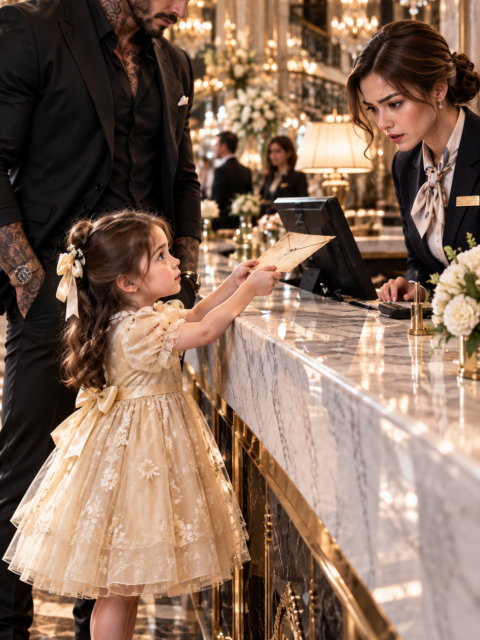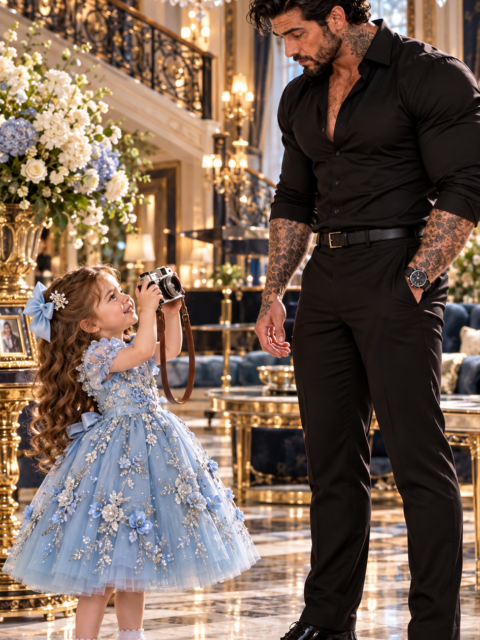
The Stuffed Dog for Toby
Before sunrise, a three-year-old girl asked a three-billion-dollar tycoon for one stuffed toy dog. But when she looked into his cold gray eyes and whispered, “It’s not for me,” Julian Hail went completely still. By morning, a forgotten legal trust signed by a woman who died six years earlier would force everyone inside his Manhattan penthouse to confront one brutal question: What is an empire worth when an innocent child is about to lose everything?
Chapter One
The Toy Friend Before Sunrise
“I need a toy friend by tomorrow,” Ivy whispered.
I heard her small, earnest voice from the open gourmet kitchen, where I was standing over the marble sink, vigorously scrubbing burned tomato sauce from an antique French copper saucepan worth considerably more than my first car.
Beyond the floor-to-ceiling glass of Julian Hail’s forty-second-floor penthouse, Manhattan glittered beneath a freezing, star-filled December sky. The city was asleep, but inside the penthouse, coffee brewed and monitors hummed. My three-year-old daughter Ivy was tugging gently at the charcoal wool trousers of a man worth three billion dollars.
“Mr. Hail has important work, baby,” I called softly, keeping my hands deep in the soapy water. “Come back to the kitchen.”
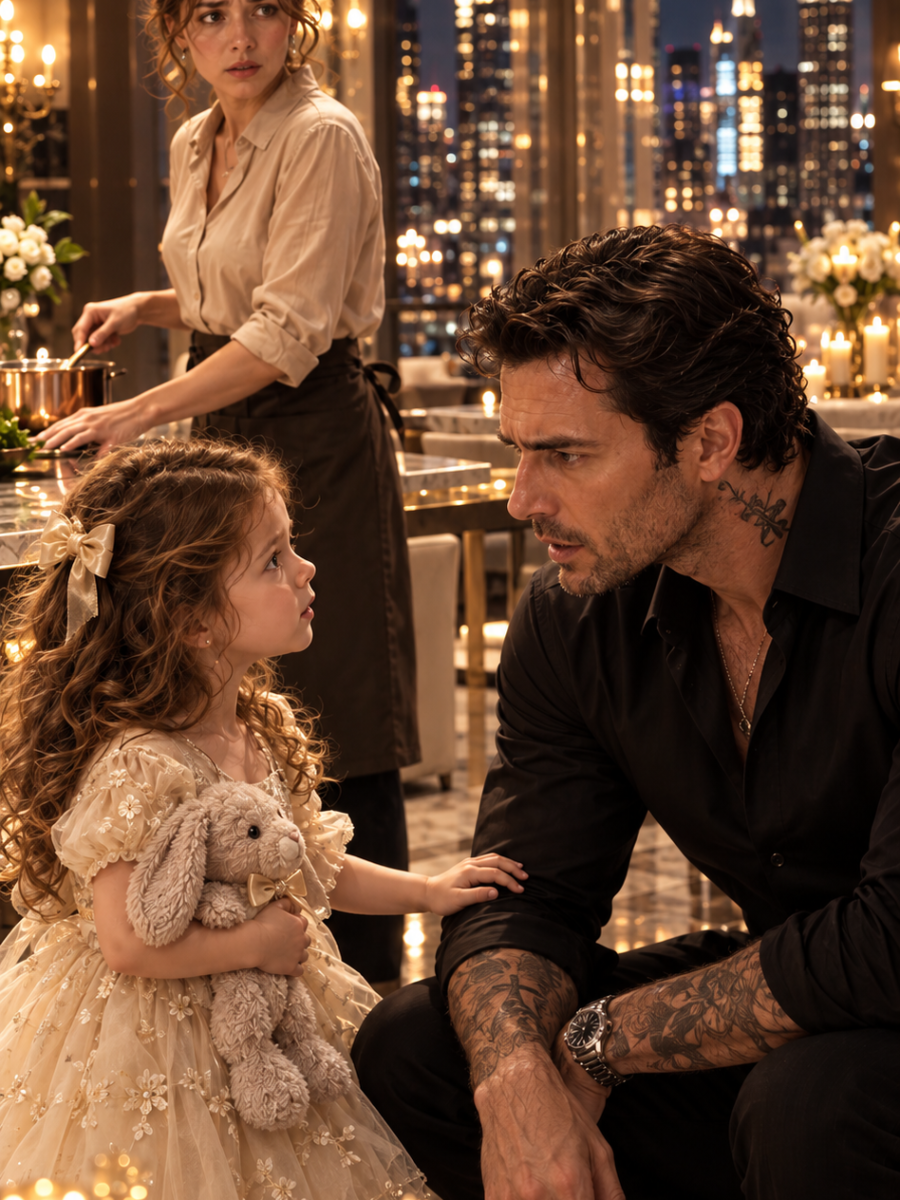
Julian did not wave her away. To the global shipping industry and Wall Street boards, Julian Hail was an untouchable titan whose phone calls made state governors clear their afternoon schedules. But whenever my thirty-two-pound toddler walked into the room, the titan vanished. He crouched down on the herringbone oak floor, meeting her at eye level.
“What kind of toy friend?” Julian asked, his deep baritone unusually patient.
Ivy hugged her faded cloth rabbit against her chest. “A dog. With floppy ears. It has to be tomorrow morning.”
A faint, rare smile crossed Julian’s stern jaw. “I think that can be arranged, little bird.”
Of course it could. Julian owned skyscraper hotels, deepwater freight terminals, concrete conglomerates, and private banking trusts. Men visited him after midnight in dark sedans who clearly did not look like bankers, and I had learned two years ago that survival in this house meant never asking who they were.
Then Ivy erased the smile from his face with three words.
“It’s not for me,” she whispered.
Chapter Two
The Name on Delancey Street
Julian stayed frozen on one knee. “Then who is it for, Ivy?”
“A boy who doesn’t have anybody,” she answered simply.
I had watched Julian Hail negotiate fifty-million-dollar maritime port acquisitions without a single muscle twitching in his cheek. Yet now, staring at a three-year-old holding a plush rabbit, he looked suddenly, remarkably frightened.
“Who?” Julian asked.
Ivy glanced toward the kitchen sink, her little eyes filled with sudden conflict. “Mommy said it’s a secret.”
“Elena,” Julian called, not turning his head.
I kept scrubbing the pan with excessive vigor. “Elena.”
Reluctantly, I dried my hands on a linen towel and stepped into the dining archway. “Mr. Hail, it’s nothing. It’s personal.”
Then Ivy betrayed my secret with a single breath: “Toby.”
Julian’s eyes narrowed into slits of dark granite. “Toby?”
“He’s my friend,” Ivy explained proudly. “He likes dogs. But Brown Dog belongs to Saint Anne’s, and the mean lady with the clipboard says Brown Dog can’t go in the van.”
Julian’s head snapped up. “What did you say?”
I stepped between them, answering before Ivy could say more. “Saint Anne’s Children’s Home, sir. The shelter on Delancey Street.”
“The one on Delancey?” Julian’s voice dropped into an octave so low and dangerous the crystal flutes on the sideboard softly hummed.
“Yes,” I murmured, my heart beginning to pound against my ribs. “On weekends, when I take Ivy to church, we volunteer in the nursery. Toby is six. His mother died when he was an infant. Tomorrow morning at eight, the city is shutting the home down for redevelopment. Toby is being transferred to a state juvenile facility upstate.”
Every drop of color drained from Julian Hail’s face until he looked like a statue carved of winter ice.
Chapter Three
The Whisper of Katherine
“You know Saint Anne’s?” I whispered, stunned by his reaction.
Julian turned his back to us, striding toward the panoramic glass wall overlooking Manhattan. The dawn was beginning to bleed cold gray and violet across the skyline, but Julian stared into the abyss of the streets below as though a ghost had risen through the concrete.
For six years, Julian Hail had carried an impenetrable armor around his heart. Society columns speculated about his cold, reclusive bachelor life. His competitors whispered that he was a machine of numbers and contracts. But standing there before the dawn, his hands trembling inside his trouser pockets, he looked like a broken man.
He turned back slowly. In his eyes, I saw an emotion I had never seen in two years of working in this home: raw, terrifying panic.
“What is Toby’s last name, Elena?” Julian asked, his voice cracking like dry wood.
“The shelter records call him Toby Vance,” I answered, my voice small. “They said his mother died in the charity ward of Bellevue Hospital six years ago. Her name was—”
“Katherine,” Julian whispered.
The heavy copper pan slipped from my hands. It struck the marble kitchen floor with a deafening, metallic crash that echoed off the high ceiling.
I stared at him in utter disbelief. “How do you know that name?”
Julian closed his eyes, a ragged breath tearing from his throat: “Because Katherine was my younger sister.”
Chapter Four
The Sealed Vault of 2018
The silence in the penthouse became a suffocating vacuum.
“Your sister?” I gasped, reaching down to steady Ivy, who had retreated behind my apron in alarm at the falling pan.
“Six years ago,” Julian said, his words falling like heavy stones, “my family was caught in the middle of a brutal hostile takeover by the Sterling Trust cartel. Threats were made against our bloodline. Katherine was pregnant, terrified, and furious that my empire had brought wolves to our doorstep. She fled Manhattan in the middle of the night, severing all contact.”
He walked over to his private study desk, punching an eight-digit code into the concealed biometric safe behind the walnut wainscoting. The heavy steel door released with a hydraulic hiss.
“Four months later,” Julian continued, his jaw tightening until the tendons in his neck showed white, “my senior estate attorney, Richard Sterling, brought me a death certificate. He told me Katherine had died during childbirth in an isolated clinic in Maine, and that the child had been stillborn. He told me my sister was gone, and that our lineage had ended.”
From the depths of the safe, Julian pulled out a thick, faded leather portfolio tied with navy silk ribbon. Inside was an irrevocable testamentary trust deed, signed in Katherine Vance’s own fluid handwriting, dated November 2018.
“The Katherine Vance Trust,” Julian read, his voice shaking with a fury so monumental the room seemed to vibrate. “She established a fifty-million-dollar endowment for Saint Anne’s on Delancey Street. With one explicit clause: that if anything happened to her, her son Toby was to remain at the home under private care until Julian Hail came to claim him.”
Julian looked at the signature page. Beside Katherine’s name was the signature of the trustee who had managed the endowment for six years: Richard Sterling.
Chapter Five
Six Years of Stolen Heritage
Every piece of the dark puzzle snapped together with blinding, horrifying clarity.
Richard Sterling—Julian’s trusted corporate attorney and head of the Sterling Trust Consortium—had never reported Toby’s survival. Sterling had pocketed the fifty-million-dollar trust yield year after year, hiding Katherine’s living son in plain sight inside the crumbling, underfunded walls of Saint Anne’s. And now, having finalized the multi-billion-dollar commercial rezoning of Delancey Street, Sterling was shutting the orphanage down, sending six-year-old Toby into the state juvenile system under an anonymous ward registry so the boy would never discover his inheritance.
“He kept my sister’s son in a shared dormitory,” Julian whispered, his gray eyes turning to liquid fire. “While I sat forty-two floors above the city in three billion dollars of empty glass.”
Ivy stepped out from behind my skirt. She carried her plush rabbit, looking up at the towering billionaire who had never looked so fragile. She reached into her little pocket and held out something small and shiny.
It was a polished brass button.
“Toby gave this to me yesterday,” Ivy said softly. “He said when the big white van comes to take him away, I should keep his button so I don’t forget him.”
Julian knelt before the three-year-old girl. He took the tiny brass button into his large, calloused palm. He closed his fingers around it as if it were the most sacred treasure on earth.
He looked at his watch. 6:14 A.M. The transfer van on Delancey Street was scheduled to depart at 8:00 A.M.
Julian reached for his private phone. “Cassian. Assemble the convoy. Every car. Every man. We’re going to Delancey Street.”
Chapter Six
The Transfer Van at Dawn
At 7:42 A.M., freezing sleet began to pelt the cracked asphalt of Delancey Street on the Lower East Side.
Saint Anne’s Children’s Home was a grim, four-story Victorian brick building, surrounded by rusted chain-link fences and peeling yellow paint. At the curb sat an unmarked white passenger van with tinted windows. Two state transport officers in raincoats were loading cardboard boxes into the rear doors.
Standing on the icy front steps was six-year-old Toby. He wore a threadbare gray coat two sizes too small, his hands buried deep in his pockets, his dark hair plastered against his forehead by the sleet. Clutched beneath his elbow was an old, one-eyed stuffed dog with matted brown fur.
Beside him stood Mrs. Murdock, the stern home director, holding a clipboard, alongside Richard Sterling in an expensive vicuña overcoat, checking his gold wristwatch with impatient disdain.
“Put the dog in the trash bin, boy,” Sterling ordered coldly. “State transport regulations do not permit unsterilized plush items in the vehicle.”
Toby hugged the brown dog tighter against his chest, tears freezing on his pale cheeks. “My mom gave it to me before she went to heaven, sir. Please.”
“I don’t care about your mother,” Sterling sneered, reaching down to rip the toy from the boy’s grip. “Get in the van before I have the officers carry you.”
Before Sterling’s fingers could touch the frayed toy, the thunder of high-performance engines shook the street.
Six black armored Cadillac Escalades screeched around the corner of Delancey, cutting off the transfer van and jumping the curb to surround the entrance.
Chapter Seven
The Confrontation with Sterling
Twenty armed enforcers in black wool coats emerged from the convoy, forming an impenetrable barrier across Delancey Street.
The passenger door of the lead vehicle opened. Out stepped Julian Hail. He wore no overcoat against the sleet. In his right arm, he carried a brand-new, enormous plush golden retriever with long floppy ears, fresh from an exclusive Fifth Avenue toy boutique. Beside him, holding my hand, walked little Ivy, her boots splashing through the icy slush.
Richard Sterling took two stumbling steps backward, his face draining of every drop of color. “Julian? What… what are you doing here? This is an administrative city closure—”
Julian walked up the concrete steps with the slow, terrifying certainty of an avalanche. He stopped two feet from his former attorney. “Did you think I would never find him, Richard?”
“Julian, you don’t understand—”
“Fifty million dollars,” Julian’s voice cracked through the freezing morning like a bullwhip. “You forged my sister’s death records. You embezzled her trust yield. You kept my nephew in a charity dormitory while you built condominiums with his blood money.”
Sterling reached toward his briefcase, but Cassian stepped forward, wrenching the leather case from his grip and pinning the lawyer against the brick wall. From the end of the block, three unmarked black sedans bearing federal marshal plates pulled up, their sirens flashing red and blue against the sleet.
“The U.S. Attorney’s office has already frozen every account tied to the Sterling Trust Consortium,” Julian said quietly. “You will spend the rest of your natural life in a federal penitentiary, Richard. Take him away.”
Sterling was dragged down the steps in handcuffs, leaving six-year-old Toby standing frozen in the sleet, staring at the tall stranger.
Chapter Eight
The Boy Who Finally Came Home
Julian did not look at the sirens. He did not look at the crowds gathering on Delancey Street.
He knelt down on the wet, icy steps directly in front of the six-year-old boy. Looking into Toby’s face was like staring through a window into the past: the boy had Katherine’s stubborn chin, her warm hazel eyes, and the gentle arch of her brows that Julian had mourned for six long years.
Toby clutched his matted brown dog, his lower lip trembling in confusion. “Are you sending me away, mister?”
Julian shook his head. A tear broke free from his eye, running down his scarred cheek and dropping onto the sleet. “No, Toby. I’m bringing you home.”
He set the large, soft plush dog down beside the boy. “Ivy told me you needed a friend who wouldn’t belong to the home. This one belongs to you. And so does the old one.”
From his pocket, Julian produced the tiny brass button. He held it out in his palm. “And I believe this is yours.”
Toby looked at the button, then at Ivy, who was grinning from ear to ear under her knitted beanie. “Ivy? You brought him?”
“I borrowed him for you,” Ivy announced proudly.
Julian reached out with both hands, gently lifting the six-year-old boy off the cold steps and pulling him tight against his chest. Toby hesitated for half a breath, then buried his face into Julian’s neck, his small arms wrapping tightly around the billionaire’s broad shoulders as six years of loneliness dissolved in a flood of warm, weeping relief.
“You’re safe now, Toby,” Julian wept, kissing his nephew’s dark curls. “Uncle Julian is right here. And I will never let you go again.”
By noon, the sleet over Manhattan had given way to brilliant winter sunlight. Inside the forty-second-floor penthouse, three new bedrooms were being prepared on the east wing. A warm feast of roast chicken and sweet potatoes filled the air, and laughter echoed across the marble halls for the first time since the tower was built.
In the grand living room, Toby and Ivy sat together on the deep velvet sofa, lining up their plush dogs, whispering secrets about the stars.
Julian stood beside me in the kitchen archway, a mug of coffee in his hand, watching the children play. He had stripped off his suit jacket, his face radiating a profound, unshakeable peace.
“Elena,” Julian said softly, turning to look at me.
“Yes, Mr. Hail?”
“You and Ivy are no longer my domestic staff. You brought my family back from the dead. This penthouse is your home now, and as long as I live, you and your daughter will never have to worry about a single day again.”
I looked at the children laughing in the sunlight, tears of gratitude welling in my eyes as I smiled and took his hand.
The billionaire had spent a lifetime building an empire of three billion dollars. But as he watched his nephew smile, Julian Hail knew that the greatest wealth he would ever possess had been bought with a single stuffed dog and a little girl’s love.